Is it wrong to have a "wrong" sense of problem?
When observing various problems in the world, I sometimes see people who seem to be overreacting. Since everyone has different standards, the reasons and directions for feeling anger vary from person to person. Even if everyone experiences the same issue, the weight of their awareness will inevitably differ.
This is why I often feel exhausted seeing the fierce clash of opposing claims regarding political polarization or social issues. Yet at the same time, I also believe this is the right path. As extreme arguments collide, more intellectuals strive to solve social problems, and through this process, civic awareness grows. For one side to completely deny the other, new arguments must constantly arise. In turn, past faults are often obscured by new logic, and in this dynamic, all sides evolve.
Therefore, even if individuals or groups possess a so-called "wrong" sense of problem, they still make a positive contribution by sparking public discourse and elevating societal awareness. If something is wrong, people will emerge to correct it, and in the process, each side builds arguments to defend their stance. These layers of logic eventually form towering structures. From a distance, they may look impressive, but when built on a faulty foundation, they are in constant crisis. To others, they might appear absurd, but for those constructing them, these are precious beliefs.
The madness of ideologies or religions, when it engulfs society into a singular worldview, is deeply terrifying. Most belief systems created by humans have proven fragile when pushed to extremes. Absolute power and a society that speaks with one voice have historically produced far more destructive violence than the conflicts born from opposing views.
No matter how chaotic South Korea may seem, I don’t believe it's worse than places like North Korea or China, where only one narrative is allowed. In such societies, even thinking differently or opposing the regime can lead to purging or social penalties. These systems suppress the awareness of problems, creating a facade of harmony, but everyone knows this only internalizes deeper conflicts.
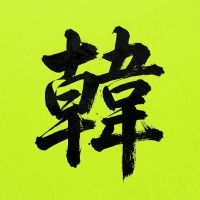
The "lying flat" (탕핑, Tang Ping) movement among China’s 20–30s shows how alienating the social atmosphere has become. Under governmental pressure, people resort to passive forms of resistance, silently expressing their struggles. On the flip side, others express their frustration through violent acts. The term “헌” (Hen), derived from the brutal historical figure Zhang Xianzhong, symbolizes this trend of senseless hate crimes and acts of terror.
A society that fails to properly express its sense of problems often ends up manifesting them in either passive defense mechanisms or extreme outbursts. Although Korea suffers from serious internal conflicts, the fact that these problems can be voiced is, paradoxically, what helps heal the nation. In contrast, societies that suppress discourse see problems fester like an untreated wound.
Thus, as unfortunate as it may be, our severe social conflicts are evidence that democracy is functioning. They serve as a kind of preservative that prevents us from becoming a society with no public discourse. Of course, each side wishes their views to dominate public opinion and desires a National Assembly where their party holds the majority. But such dominance is the path to corruption. Throughout human history, absolute power has almost always led to dangerous outcomes.
Problem awareness is valuable. Even if it’s "wrong," it is still valuable. Whether a sense of problem is right or wrong should be determined by seemingly endless debate and struggle within society. Through that process, each force gains or loses strength—and society grows because of it.